Bedding and sleep environment
How Wool Layers Shape a More Breathable Sleep Surface
Wool can soften a mattress without turning the bed into a heavy blanket. Its loft and ability to take up moisture make it a distinctive bedding material—but comfort depends on the whole construction, from the fiber inside to the fabric around it and the fit on the mattress.
Published October 18, 2026
A sleep surface is not a single thing. It is a stack: mattress, pad or topper, protector, fitted sheet, and sometimes another blanket before the sleeper ever settles in. Each layer can change how the bed feels and how it handles warmth and moisture. Wool earns attention in that stack because it offers cushioning while behaving differently from many dense, heat-retaining fills.
That does not make wool a universal solution for sleeping hot, nor does the word itself guarantee a cool night. A thick, tightly quilted layer can still feel warm. A light layer with breathable fabrics may feel quite different. The useful question is not simply whether a bedding item contains wool. It is how much wool it contains, how the fill is held in place, what covers it, and whether the layer suits the mattress and the person using it.
Understanding those details turns a vague promise of “natural comfort” into a practical decision. For some sleepers, a wool pad is a way to add gentle softness without dramatically changing the mattress. For others, the priority may be protection, easy laundering, or a flatter sleep surface. The right choice begins with the job the layer is meant to do.
What wool brings to a bed
Wool fibers have a naturally crimped structure that gives wool fill loft and resilience. In bedding, that structure can create a soft, lightly cushioned layer between the sleeper and the mattress. Unlike a thick foam topper designed to substantially change firmness, a pad typically adds a more modest surface adjustment. The distinction matters: a pad may make the bed feel more comfortable, but it is not necessarily a substitute for a mattress that provides appropriate support.
Wool is also valued for its interaction with moisture. The fiber can absorb water vapor while still feeling relatively dry to the touch. That characteristic may help moderate the damp sensation that can accompany perspiration, although it cannot eliminate sweating or control a room’s humidity. Bedroom temperature, pajamas, sheets, mattress construction, health, and personal physiology all affect how warm a person feels at night.
“Breathable” is often used as if it were a simple, measurable promise. In practice, airflow and comfort reflect the entire bedding system. Fiber, fabric weave, quilting, fill density, and the layers above and below the wool work together. A breathable cotton cover, for example, may allow a different experience from a dense or coated fabric. A waterproof barrier underneath or above the pad can also alter how air and moisture move through the bed.
Wool is therefore best understood as one component, not a climate-control device. It may help create a more balanced-feeling sleep surface for some people, but it does not guarantee that every sleeper will feel cooler. The distinction between material properties and personal experience is important when evaluating bedding claims.
Pad, topper, or protector: know the layer’s purpose
The labels used for bedding are not always consistent, so construction and intended use matter more than the name on the package. A mattress protector is primarily meant to shield the mattress from spills, dust, or everyday wear. A mattress pad usually adds a modest amount of cushioning and may offer some surface protection. A topper is generally thicker and intended to make a more noticeable change to the feel of the bed.
Some products combine purposes. A quilted wool pad, for instance, can add loft while forming a washable layer over the mattress. Yet it should not automatically be treated as waterproof or as a complete barrier against allergens. Check the construction and care guidance rather than assuming that a material provides protections it was not designed to offer.
Before choosing a wool layer, identify the main problem you want to solve. If the mattress feels slightly firm at the surface, a pad may supply gentle cushioning. If the mattress is badly worn or does not provide comfortable support, a thin layer may not correct the underlying issue. If spills are the central concern, look for a product specifically designed as a waterproof protector, and consider how that barrier may affect the feel and breathability of the complete setup.
Fill density and thickness change the experience
Wool fill is not one uniform material. The quantity of wool, how it is processed, and how it is distributed all affect the layer’s loft and feel. A denser pad may feel more substantial; a lighter one may preserve more of the mattress’s original character. Thickness alone does not tell the whole story. Two layers of similar height can feel different depending on the fill, quilting pattern, and cover.
Fill density is one useful detail to compare when specifications provide it. Some descriptions state the weight of batting, while others offer only broad language such as “plush” or “cushioned.” Those terms can be subjective. When the information is available, look for the material composition and construction details alongside the stated thickness, and remember that a pad’s feel will also depend on the mattress underneath it.
Quilting or tufting helps keep fill from shifting, but it can influence the surface. Closely spaced quilting may hold the wool in smaller sections, while other constructions allow a more continuous loft. A product that feels smooth in a showroom may settle or compress with use. It is sensible to treat advertised softness as a guide rather than a precise prediction of how the bed will feel after months of nightly use.
The cover matters as much as the fill
A wool layer is more than its batting. The outer fabric is the part closest to the sheet, and its weave and finish can change the hand, flexibility, and movement of the pad. Cotton is a common companion to wool because it provides a familiar, soft textile surface. But “cotton” alone does not specify how heavy, tightly woven, or breathable a cover will be.
Check whether the cover is made from a natural fiber, whether it contains coatings or synthetic components, and whether it is removable. A cover that is not removable may limit cleaning to the care methods stated by the maker. A washable fill may make routine maintenance easier, but washing can still involve restrictions on temperature, detergent, drying, and machine type.
For people sensitive to texture, scent, or particular materials, the cover and the wool itself deserve attention. Wool can have a natural earthy odor, especially when new or damp. That does not necessarily mean the material is defective, but anyone who knows they are sensitive should review the fiber and care details before use. Material descriptions are not a substitute for individual allergy or medical advice.
Fit is part of comfort
A bedding layer that bunches or slips can interrupt sleep no matter how appealing its materials are. Measure the mattress depth, including any existing layers that will remain beneath the fitted skirt. Compare that measurement with the pad’s pocket depth or attachment design, and allow for the fact that a plush mattress may need more room than a thinner one.
Fitted designs use elasticized sides or pockets to hold a pad in place. Other styles may use corner straps. The best arrangement depends on mattress dimensions, height, and whether the mattress sits on a flexible or adjustable base. A layer that is stretched too tightly may pull away at the corners; one with excess fabric may shift or wrinkle. A smooth fit helps the bedding remain comfortable and makes it easier to keep the top sheet in place.
Pay attention to sizing language. Mattress sizes can vary slightly, and a split or adjustable bed may require separate pieces. If the mattress has a pillow top or unusually deep profile, confirm that the product is designed to fit rather than assuming standard sizing will work. This is a small piece of practical planning that can prevent a promising material choice from becoming a nightly nuisance.
A real-world example of wool bedding
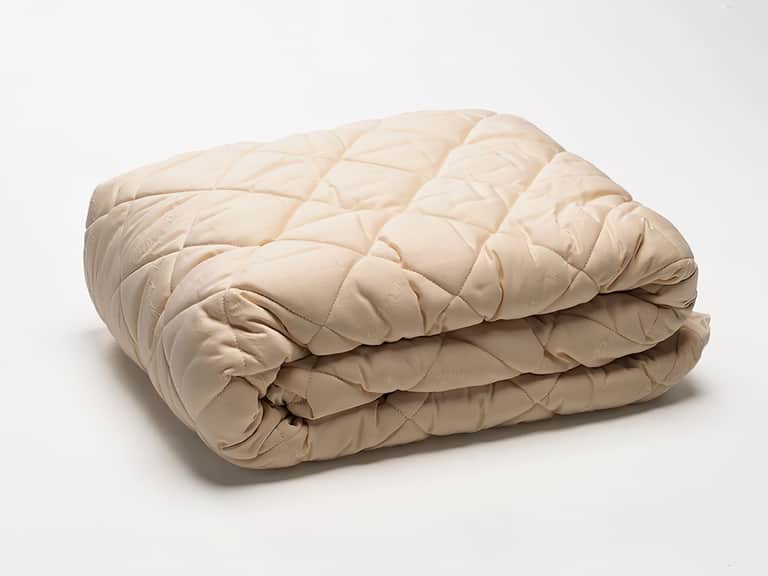
The Suite Sleep Washable Wool Mattress Pad illustrates several of the details worth checking. Its fill is super-washed natural wool, and its top and bottom are covered in organic cotton. The fitted style has 18-inch pockets, and the manufacturer describes the pad as machine washable. Its wool batting is listed at 1.8 pounds per linear yard.
Those specifications help describe what the item is: a fitted mattress pad with wool fill, cotton fabric, and a stated care method. They do not predict exactly how warm or plush it will feel for every sleeper. Mattress depth, room climate, sheets, and personal preference remain part of the equation. The product information also notes a natural earthy wool fragrance, a useful detail for anyone who prefers to know what to expect from the material.
When comparing this type of construction with other options, focus on the same practical criteria rather than on broad claims. Consider the fill, shell fabric, pocket depth, care instructions, and whether the pad is intended to cushion, protect, or do both. That gives a more meaningful comparison than treating all wool bedding as interchangeable.
Care can determine how long a layer stays comfortable
Wool’s useful qualities do not remove the need for careful laundering. Follow the instructions supplied for the specific item, since washable wool products can differ in processing and construction. For a pad designed for machine washing, the care guidance may specify cold water, a gentle cycle, a particular detergent, and low-heat or air drying. High heat or rough handling can shrink fabric, distort the fill, or shorten the life of elastic components.
It is also worth distinguishing “machine washable” from “easy to wash.” A large mattress pad may be bulky, and some home machines are not suited to washing oversized bedding. If the item is too crowded in the drum, it may not rinse or dry evenly. Check both the product instructions and the capacity of the machine before laundering. Drying thoroughly matters: bedding should not be put back on the mattress while damp.
Use a top sheet and keep the pad protected from routine spills where possible. Airing bedding can help it feel fresh, but care should follow the maker’s directions, especially for direct sunlight or prolonged exposure to moisture. Spot cleaning may be preferable for small marks if the label permits it. A clear care routine is part of choosing a material—not an afterthought.
Certifications: useful information, not a shortcut
Certifications can help clarify how particular materials or manufacturing processes were assessed. Their scope varies, so read what a certification applies to: the fiber, the finished textile, a facility, or another part of the supply chain. A label does not automatically establish every claim about environmental impact, safety, or performance, and one certification should not be treated as interchangeable with another.
If organic materials are a priority, verify which components are certified and whether the claim applies to the wool, cotton, or both. Ask what standard is being referenced and whether the product documentation identifies the relevant scope. The same care applies to terms such as “natural,” “chemical-free,” and “hypoallergenic,” which can be broad and are not always a precise description of how a finished product will affect an individual.
Special care for crib sleep surfaces
A wool layer made for an adult bed should never be assumed suitable for an infant. Crib mattresses have distinct dimensions and safety requirements, and an added layer can affect the fit of the fitted sheet or create an unsafe sleep surface. Choose only an item explicitly designed for the crib and follow current safe-sleep guidance from recognized health authorities. Keep the sleep space arranged according to that guidance; comfort preferences for adults do not override infant safety.
For any crib product, check that it fits the specific mattress securely and that the maker’s instructions are followed. A topper’s material, thickness, or natural origin does not by itself establish that it is appropriate for an infant. If there is uncertainty, consult a pediatric health professional or a reliable public-health resource before adding anything to the sleep space.
How to decide whether wool fits your setup
A useful comparison starts with the mattress you already own. Note whether it feels too firm at the surface, whether you wake damp or overheated, and whether the bedding shifts during the night. Those observations are not a diagnosis, but they can help distinguish a need for cushioning from a need for better fit, lighter bedding, or a change in room conditions.
- Define the goal. Decide whether you want modest cushioning, mattress protection, moisture management, or a combination.
- Review the construction. Compare wool content, fill weight or density when listed, quilting, and cover fabric.
- Measure before buying. Check mattress size and depth, including any layers that will stay in place.
- Read the care label. Confirm that washing and drying requirements are realistic for your household.
- Check claims carefully. Look for specific material and certification details rather than relying on general marketing language.
- Give the complete bed a fair assessment. Sheets, blankets, room temperature, and the mattress all contribute to the experience.
Wool can be a thoughtful choice for sleepers seeking a softly cushioned, breathable-feeling layer made with natural fibers. Its appeal lies in a particular balance: loft without necessarily adding the heavy, enveloping sensation some people dislike, and moisture absorption without a promise to regulate every sleeper’s temperature. The result is individual, and the details of construction determine much of what the material can do.
The most reliable approach is measured rather than miraculous. Choose a layer for a clear purpose, verify its fit and care, and consider how it works with the mattress and bedding already in place. A sleep surface is built one decision at a time. Wool may improve that arrangement—not by transforming the bed on its own, but by contributing a considered layer to the whole.