Bedding • Mattress design
Inside the Vispring Baronet Superb: Materials, Support, and Fit
A mattress is more than a surface with a firmness label. Its springs, upholstery, construction and compatibility with a bed base all help determine how it feels in use. The Vispring Baronet Superb brings pocket-spring construction together with natural-fibre comfort layers. Understanding what those elements can—and cannot—tell you is a practical first step toward deciding whether its design suits your sleep preferences.
Published November 3, 2026
Start with the construction, not the reputation
Vispring is associated with traditional pocket-spring mattresses and natural upholstery materials. That heritage may be part of a shopper’s interest, but a name alone cannot establish whether a mattress will feel comfortable or provide the support an individual needs. The more useful questions are concrete: How is the spring unit arranged? What materials sit above it? How does the mattress respond when you lie down? And does it work with your frame, room and preferred sleeping position?
The Baronet Superb is generally described as a pocket-sprung mattress with natural-fibre layers. Exact specifications can vary by size, model year and market, so current manufacturer information should be checked before purchase. Spring counts, fillings, mattress depth, firmness options and construction details are not interchangeable facts: they should be verified for the specific version under consideration rather than inferred from a general description or a different Vispring model.
That distinction matters because mattress terminology can make a design sound more predictable than it is. “Pocket spring” identifies a type of spring arrangement, not a universal feel. “Natural fibres” describes a broad family of materials, not a single comfort level. The real experience emerges from the combination of components, their proportions and how they respond to a particular body.
What pocket springs do
In a pocket-spring system, individual coils are housed in fabric pockets. Because the springs are not simply joined into one rigid unit, they can respond more independently than coils connected across a conventional open-spring structure. In principle, this allows one area of the mattress to compress without requiring the entire surface to move in the same way.
That independent response can contribute to a more localised feel beneath the shoulders, hips and other parts of the body. It may also help limit how much movement travels across the bed when one sleeper shifts. Neither effect is guaranteed to a specific degree: the pocket unit’s design, the upholstery above it, the mattress dimensions and the bed base all influence what a sleeper actually notices.
Spring count is often treated as a shortcut for quality or support. It is not. Counts may be reported per mattress or per unit, may differ by size, and do not by themselves reveal spring gauge, tension, layout or the way the springs are paired with comfort layers. A higher figure does not automatically mean better alignment or a more comfortable bed. It is more informative to consider a verified specification alongside an in-person trial and a clear understanding of your own preferences.
Support is not synonymous with firmness. A mattress can feel cushioned at the surface while still resisting deeper compression, or it can feel firm without providing a suitable fit for every body. The aim is a sleep surface that feels comfortable and allows the body to rest in a position that works for the sleeper. Comfort is personal; support should be judged in relation to the person using the mattress, not as an abstract rating.
Natural fibres and the comfort layer
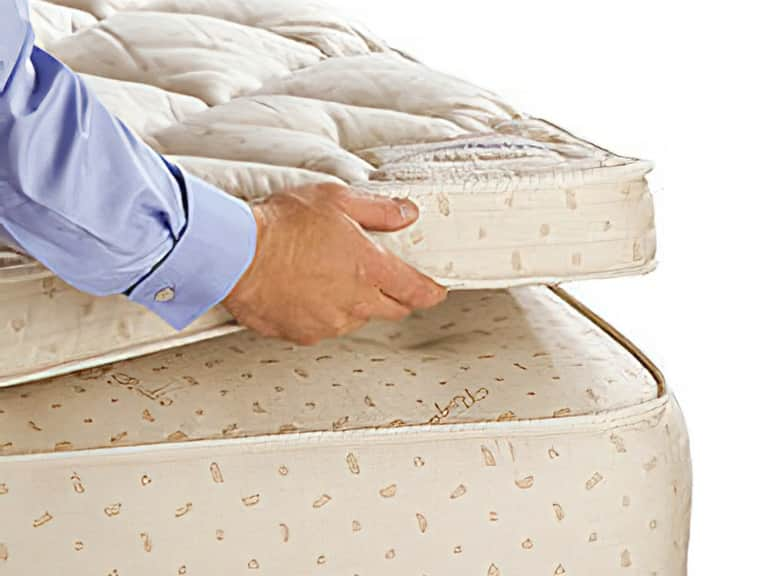
Natural fibres are used in mattress upholstery for several reasons: they can add cushioning, alter the way the surface responds, and influence moisture and heat management. Wool and cotton are common examples in natural-fibre bedding, while some mattresses may incorporate other fibres. The exact filling recipe for a particular Baronet Superb should be confirmed with the manufacturer or authorised retailer, including whether materials differ by size or current production run.
Layers above the springs shape the first impression of a mattress. They influence how quickly the surface gives way, whether it feels buoyant or more enveloping, and how much separation there is between the sleeper and the spring unit. A mattress with natural upholstery is not automatically soft, cool or hypoallergenic. Those outcomes depend on the materials, the amount and arrangement of each layer, the cover, the sleeper’s physiology and the room environment.
Wool is often valued in bedding for its ability to absorb and release moisture, as well as for a springy, resilient character. Cotton can provide a familiar textile feel and may be used in covers or upholstery. Yet fibre names alone do not tell the whole story. Processing, density, quilting, layering and maintenance all shape performance. Even a material with useful moisture-management properties cannot compensate for a hot room, heavy bedding or individual temperature sensitivity.
Natural fillings can also settle or compress with use. This does not necessarily indicate a defect: upholstery materials may change as they are slept on. How much change occurs, how it is distributed and what warranty terms apply are questions to raise before buying. Ask what normal settling looks like, whether the mattress requires rotation, and which care instructions are recommended for its specific construction.
Firmness, feel and the limits of labels
Firmness labels can help organise choices, but they are not a precise measurement shared across all manufacturers. One company’s “medium” may feel different from another’s, and two people may describe the same mattress differently. Body weight, shape, sleeping posture, sensitivity at pressure points and familiar mattress feel all affect perception.
For side sleepers, the interaction between the shoulder, hip and surface is often especially noticeable. A mattress that does not give enough at those contact areas may feel uncomfortably resistant. If it gives too much, a sleeper may feel that the body is sinking more than desired. Back and stomach sleepers can have different priorities, though no position determines a perfect mattress by itself. People change position during the night, and their preferences may not fit neatly into a category.
When testing the Baronet Superb, spend enough time in your ordinary sleeping positions to notice pressure and alignment. A brief sit on the edge or a few seconds lying on your back will not reveal how the mattress behaves across a night. If you share the bed, test it together where possible. Pay attention to whether movement from one side disturbs the other, whether the surface feels supportive at the shoulders and hips, and whether the overall response feels natural rather than forced.
Comfort is not a diagnosis. A mattress cannot treat a medical condition, and persistent pain, numbness or sleep disruption deserves discussion with a qualified health professional. A new sleep surface may change comfort, but it should not be presented as a substitute for medical assessment or treatment.
A practical fit assessment
“Fit” has several meanings in mattress buying. It includes how the surface feels under your body, whether the dimensions suit the bed and bedroom, whether the mattress is compatible with its foundation, and whether its care requirements fit your routine. A thoughtful assessment considers all of them before a decision is made.
- Sleeping position: Test the positions you use most often, not only the one that feels convenient in a showroom.
- Pressure and ease of movement: Notice whether you can settle comfortably and change position without feeling trapped or unsupported.
- Partner needs: If sharing a bed, consider differences in body size, preferred feel and sensitivity to movement.
- Base compatibility: Check the maker’s requirements for slats, platform bases, divans or adjustable frames. Mattress construction can respond differently on different foundations.
- Room and access: Confirm mattress dimensions, depth, stairways, doorways and the space available for delivery and rotation.
- Trial and warranty terms: Read the current policies, including exclusions, return logistics, required support and care conditions.
Bed-base compatibility deserves particular attention. A suitable foundation supports the mattress as intended; an unsuitable or damaged base can affect comfort and may influence warranty coverage. Do not assume that every sprung mattress works on every slatted frame, or that an adjustable base is appropriate without confirmation. Ask for the required slat spacing, centre support and any other stated conditions.
Mattress depth is another small detail with everyday consequences. It can affect fitted-sheet fit, bed height and the feel of the sleep surface once protectors and bedding are added. Measure the existing frame and consider the total height, rather than relying on the mattress dimensions alone.
How to compare it with other designs
Comparisons are most useful when they focus on meaningful differences rather than a contest of adjectives. A pocket-spring mattress with natural upholstery may offer a distinct response from an all-foam design, a latex mattress or a hybrid that combines foam and springs. But broad categories cannot predict an individual result. Layer thickness, spring arrangement, cover construction and firmness options vary widely within each category.
Rather than asking whether one type is universally superior, ask what you want the mattress to do. Do you prefer a surface that responds quickly when you move? Do you want pronounced cushioning, or a closer, firmer feel? Are you sensitive to heat or pressure? Does motion transfer matter? These questions help narrow the field without turning a material label into a promise.
When comparing the Baronet Superb with another mattress, keep the testing conditions as consistent as possible. Use a similar bed base, spend comparable time on each surface and try the same positions. Record a few immediate observations, then separate them from assumptions based on brand or price. A premium construction may be carefully made, but its value still depends on whether it serves the sleeper’s needs and fits the household’s practical constraints.
It may also help to compare the complete care and ownership picture. Ask about recommended rotation, cleaning, protector use, delivery, trial periods, warranty coverage and the process for resolving a concern. These details do not determine comfort, but they can affect whether a mattress remains a satisfactory choice over time.
Questions worth asking before purchase
Product descriptions often provide the broad outline; a direct conversation can clarify the points that matter to a particular buyer. Request the current specification for the exact size and model, and ask the retailer to distinguish confirmed construction details from general brand information.
- What is the exact spring configuration for the size I am considering, and how is the count reported?
- Which fibres are used in the upholstery and cover, and are there differences between sizes or production versions?
- What firmness options are currently available, and how does the retailer describe their feel?
- Which bases are approved, and are there specific requirements for slat spacing or centre support?
- What care routine is recommended, including rotation and cleaning?
- What are the current trial, return and warranty terms, and what conditions could affect coverage?
These questions help translate a premium mattress description into information that can be checked. They also create a clearer basis for comparing the Baronet Superb with alternatives. If an answer depends on the exact model year, size or market, ask for that qualification in writing.
What the design can—and cannot—promise
Pocket springs and natural-fibre upholstery are meaningful design choices, but they do not guarantee a particular night’s sleep. They describe how a mattress is built, not how every person will experience it. One sleeper may appreciate the combination of local spring response and layered cushioning; another may prefer a different level of firmness, a different surface feel or a simpler construction.
Nor does the phrase “natural materials” settle every question about sustainability, health or durability. Those claims depend on sourcing, processing, certifications, product composition and evidence specific to the item. If environmental or chemical standards are important, request documentation for the exact mattress rather than assuming that a broad material description establishes a standard.
There is also no single sleep surface that guarantees better sleep for everyone. Sleep is shaped by many factors, including schedule, environment, health and stress. A mattress is one part of that setting. The most useful goal is not to find a product promised to transform sleep, but to choose a comfortable, appropriate surface and give it a fair evaluation under the conditions in which it will be used.
The bottom line
The Vispring Baronet Superb is best assessed as a particular combination of pocket springs and natural-fibre comfort layers—not as a label that predetermines comfort. Its materials may help shape the mattress’s cushioning, responsiveness and moisture handling, while the spring unit contributes to how the bed responds under pressure. The exact feel, however, depends on the full construction and the person sleeping on it.
Start with your own sleep preferences, test the mattress in your usual positions and check the current specifications for the exact size. Confirm the foundation requirements, care instructions, trial policy and warranty conditions before committing. That approach replaces marketing shorthand with evidence you can use: verified construction details, direct experience and a clear sense of what “good fit” means for you.