Sleep Surface Guide
Latex Layers Explained: Feel, Fit, and Care for a Natural Sleep Surface
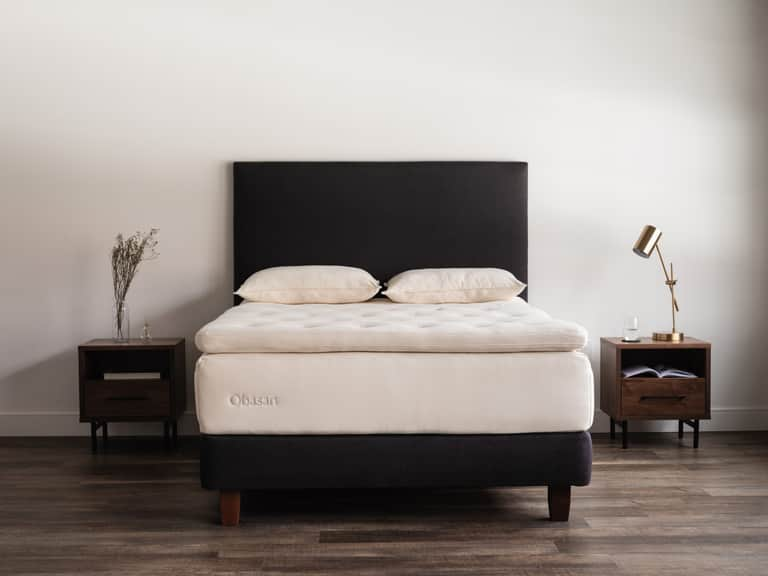
A latex topper can change the feel of a mattress without replacing its underlying support. Before adding one, consider the responsive character of latex, the thickness and dimensions of the layer, how it works with your mattress and sheets, and what care it will need over time.
Published November 20, 2026
A mattress is not a single sensation. Its surface, comfort layers, support core, cover, foundation and bedding all contribute to what a sleeper feels. A latex layer placed on top can change the first impression of that surface: it may add cushioning, soften contact at pressure points or make the bed feel more buoyant. It does not, however, replace the structure below it. That distinction is the starting point for choosing a latex mattress topper wisely.
Latex is valued for a responsive, springy feel. When pressure is applied, it compresses and tends to recover promptly when the pressure eases. That differs from materials that respond more slowly and allow a deeper, slower-feeling sink. The contrast is useful, but it is not a promise that one material will feel better to every person. Comfort depends on the whole sleep surface, the sleeper’s build and preferred position, and individual sensitivity to firmness, heat and movement.
This guide explains what latex layers can and cannot do, how thickness and mattress fit influence the result, what to check when evaluating natural or organic latex, and how to care for the layer. The aim is not to declare one configuration universally best. It is to make the choices clearer before a new layer becomes part of the bed.
What a latex layer changes
A topper sits between the mattress and the bedding. Because it is close to the sleeper, it can change the surface feel more noticeably than a change to the bed frame or foundation. A latex layer may make a firm mattress feel less rigid at first contact, provide a more resilient cushion, or create a more even-feeling transition across the body. Its effect depends on the mattress beneath it: the same topper can feel different on a firm, stable mattress than on one with a plush or worn comfort layer.
The distinction between cushioning and support matters. A topper can adjust the comfort of the uppermost part of a bed, but it cannot reliably correct a sagging mattress, restore a collapsed support core or compensate for an inadequate foundation. If a mattress dips under the hips or feels unstable across a broad area, adding a soft layer may mask the problem briefly while allowing the underlying issue to remain. A topper is most useful when the mattress is still structurally sound and its surface feel—not its basic support—is what needs adjustment.
Latex is also distinct from a mattress’s internal latex comfort layer. A built-in layer is designed as part of a coordinated system, with other materials and support components beneath it. A separate topper is an independent addition. It can be removed, changed or aired separately, but its fit and feel are not automatically matched to the mattress. The interaction between those layers is where a useful adjustment—or a disappointing one—takes shape.
The responsive feel of natural latex
People often describe latex as buoyant or lively. Those words point to its quick response: the surface gives way under load, then pushes back as the load shifts. Some sleepers appreciate this quality because it can feel easier to move on than a material that forms a deeper, slower contour. Others may prefer a softer, more enveloping sensation. Neither response is a flaw; it is a question of preference and fit.
Pressure relief is not determined by a material name alone. It depends on how much the layer compresses, where the sleeper’s weight is concentrated, and whether the mattress beneath it provides an appropriate foundation. A side sleeper, for example, may notice pressure around the shoulder and hip if the surface does not give enough. A latex topper could change that contact, but the right degree of cushioning varies by body shape, position, mattress firmness and personal comfort. Back and stomach sleepers may have different reasons to seek a surface adjustment, and a layer that feels comfortable in one position may not feel equally suitable in another.
Latex construction and formulation also influence feel. Terms such as natural latex, natural rubber and organic latex are not interchangeable shorthand for a guaranteed firmness or comfort level. They refer to material and sourcing considerations that should be checked in the maker’s specifications. A buyer comparing a natural latex topper should look beyond the headline label to the layer’s thickness, firmness description, construction, cover, certification details where relevant, and care guidance.
Organic claims should be evaluated with the same care. A claim may relate to the latex itself, the fabric cover, or a particular standard applied to some part of the product. Read what is certified and by whom rather than assuming that one label describes every component. Material transparency is valuable, but certification does not tell a sleeper whether the layer’s feel is right for them.
Thickness: a small measurement with a large effect
Thickness influences how much the topper can change the surface. A thinner latex layer generally makes a more restrained adjustment, while a thicker layer can create a more distinct cushion and alter the way the body settles into the bed. In practice, thickness works alongside firmness: a thicker firm layer may not feel like a thinner soft one, and two layers of the same thickness can respond differently if their firmness or construction differs.
It is tempting to treat greater thickness as a shortcut to greater comfort. That is not always the case. A thick topper may raise the sleeping surface substantially, change the feel of fitted sheets and make a mattress less stable at the edges. It may also soften the initial feel more than intended. Conversely, a thin topper may be too subtle to address the surface discomfort that prompted the search. The goal is not to choose the largest layer, but to identify the smallest change that plausibly addresses the problem.
Before deciding, describe what feels wrong about the current bed as specifically as possible. Is the surface too firm at the shoulders? Does it feel unresponsive when changing position? Is the mattress comfortable in one sleeping position but not another? Is the discomfort localized, or does the bed feel uneven throughout? A precise description helps separate a surface-comfort issue from a support problem that a topper cannot solve.
- For a subtle adjustment: compare thinner options and consider whether the mattress already has a plush comfort layer.
- For a more noticeable cushion: examine thicker layers, while accounting for the firmness of the latex and the mattress beneath it.
- For unevenness or sagging: check the mattress and foundation rather than expecting a topper to restore structural support.
- For uncertain preferences: review return, exchange and trial terms before purchase, and make sure the terms apply to the topper itself.
Firmness, sleeping position and personal fit
Firmness labels can help narrow a comparison, but they are not universal measurements. One maker’s “medium” may not feel identical to another’s, and the same layer may feel firmer or softer depending on the bed beneath it. A topper compresses in relation to the load placed on it. A sleeper’s weight distribution, posture and movement can therefore affect the experience.
Sleeping position offers a practical starting point, not a rigid rule. Side sleepers often look for enough surface give to reduce concentrated pressure at the shoulder and hip while keeping the body comfortably aligned. Back sleepers may focus on balanced cushioning that does not make the pelvis feel as though it sinks too far. Stomach sleepers may be especially attentive to excessive softness, since too much sink can change how the torso rests. These are considerations rather than guarantees: body proportions, existing mattress firmness and individual comfort all matter.
Latex’s responsiveness may appeal to someone who prefers a surface that adjusts quickly as they turn. That quality can also feel unfamiliar to a sleeper accustomed to a slow-contouring surface. If possible, assess a similar feel in person or use a trial option with clear terms. When a trial is not available, studying the stated firmness, thickness and construction is more useful than relying on broad claims such as “pressure relieving” or “perfect for every sleeper.”
Couples should consider that one shared topper affects both sides of the bed. If sleepers have different comfort preferences, a single layer may be a compromise rather than a precise solution. Split layers or separately adjustable sleep surfaces may be worth exploring where compatible with the mattress, though those arrangements require careful attention to dimensions and bedding.
Measure the mattress before choosing a topper
Correct sizing sounds straightforward until a mattress is unusually deep, has a pillow top, uses an adjustable base, or differs slightly from standard dimensions. Measure the mattress’s length, width and depth rather than relying only on its size name. A “queen” or “king” label identifies a common footprint, but does not specify the profile or account for variations in construction.
Check the topper’s stated dimensions and the maker’s instructions for placement. A layer that is too narrow or short may leave areas of the mattress uncovered; one that is too large can overhang, bunch or shift. Also consider how the topper is held in place. Some designs use corner straps or other attachments, while others rely on the cover and fitted sheet. The secure fit should not require stretching the layer in a way that distorts it.
Mattress depth matters particularly when choosing fitted sheets. Adding a topper increases the total height the sheet must cover. A fitted sheet that previously fit snugly may become difficult to tuck in or may pull loose overnight. Measure the combined height of mattress and topper, then check the sheet’s pocket depth and the maker’s guidance. A protector may also affect fit, especially if it is designed for a specific mattress depth. Think about the entire stack—mattress, protector, topper and sheet—before ordering.
For adjustable beds, confirm that the topper is suitable for the way the mattress bends and that it will remain in place when the base changes position. A thick or loosely fitted layer may shift as the head or foot rises. Compatibility information should come from the topper’s maker and, where applicable, the mattress manufacturer.
Natural and organic latex: read the material details
“Natural latex” generally signals a material derived from rubber-tree latex, but product descriptions can use material terms in different ways. Some products combine natural and synthetic latex; others describe a specific processing method or certification. Check the complete specification, including the core, cover and any adhesives or added components described by the manufacturer.
An organic mattress topper may be relevant to someone who is comparing material sourcing and manufacturing standards. The word “organic” should not be treated as a substitute for detailed disclosure. Look for the exact certification name, the scope of what it covers and whether it applies to the latex, textiles or finished product. If a claim is important to your decision, verify it through the certifier’s information or the product documentation rather than relying solely on a general marketing phrase.
Material selection can also involve practical preferences. Latex layers may have a characteristic smell when new, though the intensity and duration can vary. If you are sensitive to odors, ask the maker about expected ventilation time and follow the care instructions. Do not assume that every natural material is suitable for every person; individual allergies or sensitivities should be considered, and a health professional can advise on concerns that are medical rather than simply about comfort.
How a topper fits into a complete sleep surface
A latex layer is one element in a broader bedding system. The mattress supplies the underlying support; the topper modifies the upper feel; the protector helps guard the mattress; and sheets influence the surface in direct contact with the sleeper. Each layer can affect fit, breathability and the sensation of warmth. A protector, for instance, should be sized for the combined setup and selected according to its purpose. A thick pad can add cushioning of its own, making it harder to judge the latex layer alone.
To understand what a new topper changes, keep other variables steady at first. Use the same sheets and sleep in the usual position for several nights, if the maker’s terms allow. Note whether pressure, ease of movement or overall comfort changes. Avoid drawing a conclusion from a single night, when novelty, temperature, stress or an unusual schedule may influence how the bed feels. At the same time, do not continue using a layer that causes significant discomfort in the hope that every adjustment will eventually feel right.
The underlying bed should be checked too. Confirm that the foundation is appropriate for the mattress and that slats or supports are in sound condition and correctly spaced according to the mattress maker. A poor foundation can affect how the mattress performs and may be mistaken for a comfort-layer problem. If a mattress has an active warranty, review its terms before adding or modifying components; warranty conditions differ and should not be assumed.
Care, cleaning and long-term handling
Care requirements depend on the specific product. A latex core should not automatically be treated like a washable mattress pad. Many latex layers should be kept dry and are not intended for machine washing. The cover, if removable, may have separate instructions, while some covers should only be spot-cleaned. Follow the manufacturer’s directions for the exact topper rather than applying general advice from another latex product.
Before cleaning, identify which parts can be removed and what methods are permitted. If a spill occurs, address it promptly but gently, using only the cleaner and amount of moisture allowed by the care instructions. Excess water can be difficult to remove from a dense layer and may damage materials or encourage lingering dampness. Allow components to dry fully before reassembling the bed. Avoid direct heat, harsh chemicals or prolonged exposure to sunlight unless the maker specifically says they are suitable.
Regular ventilation can help keep bedding fresh, but handling a topper should be practical and safe. Latex can be heavy, especially in larger sizes, and twisting or folding it sharply may strain the material. Use the handling directions provided, and ask for help when lifting a bulky layer. If the topper includes a cover, keep it correctly positioned and inspect seams, straps and closures periodically.
Protecting the mattress and topper from moisture and everyday soiling can reduce the need for intensive cleaning. A compatible protector can be useful, provided it does not make the surface uncomfortably warm or interfere with the topper’s fit. Launder sheets and washable covers according to their labels, and ensure that everything is fully dry before making the bed.
Common expectations to reconsider
A topper will fix a worn-out mattress. It may soften a surface, but it cannot rebuild a failing support core or remove a persistent dip. Start by identifying whether the problem is structural.
Thicker always means more comfortable. More material creates a more substantial change, not necessarily a better one. The right thickness depends on firmness, the mattress underneath and the sleeper’s preference.
Natural means one particular feel. Material origin does not establish whether a layer is soft, firm, lively or suitable for a specific position. Construction and specifications matter.
A topper will change sleep quality for everyone. Bedding can influence comfort, but sleep is shaped by many factors. A latex mattress topper is not a treatment for insomnia, pain or another medical condition.
A measured way to make the decision
Begin with the problem, not the product category. If the mattress is supportive and level but feels too firm at the surface, a topper may be worth considering. If it sags or feels unstable, investigate the mattress and foundation first. Then compare latex options by thickness, firmness, dimensions, cover materials, attachment method and care instructions. Check that the added height will work with your sheets and protector, and confirm trial or return terms before purchase.
For a reference point on how latex operates within a larger sleep system, the Naturepedic EOS Pillowtop Organic Hybrid Mattress combines an organic Dunlop latex comfort layer and a separate latex pillowtop with an encased coil support layer. It is a mattress rather than a standalone topper, but its layered construction illustrates the distinction between surface cushioning and deeper support. Its specifications should not be taken as a substitute for evaluating a separate topper’s fit or feel.
Keep expectations proportionate. A well-chosen layer can make a sound mattress feel more compatible with a sleeper’s preferences, but it remains an adjustment—not a new support system. Latex’s characteristic responsiveness, the thickness of the layer and the fit of the complete bedding stack all deserve attention. A careful comparison is more likely to lead to a useful change than a decision based on a single label or the assumption that one material suits every bed.
A final checklist
- Confirm that the mattress is structurally sound and supported by a compatible foundation.
- Identify the surface issue you want to address and whether it is about cushioning, responsiveness or fit.
- Compare latex type, firmness description and thickness without assuming that labels are standardized.
- Measure the mattress and check the topper’s dimensions, attachment method and compatibility with an adjustable base if relevant.
- Measure the combined bed height and verify that sheets and protectors will still fit.
- Review material disclosures, certifications and care instructions, including what can and cannot be washed.
- Read the trial, exchange and warranty terms, and seek professional advice for medical concerns rather than treating a topper as therapy.
A latex layer is best understood as a tuning element: a way to alter the feel at the surface while leaving the mattress’s basic structure in place. When thickness, firmness, dimensions and care are considered together, the choice becomes less about chasing a universal ideal and more about finding a layer that fits the bed—and the person sleeping on it.
This article is for general educational purposes and is not medical advice. Sleep discomfort that is persistent, severe or associated with other symptoms should be discussed with a qualified health professional.